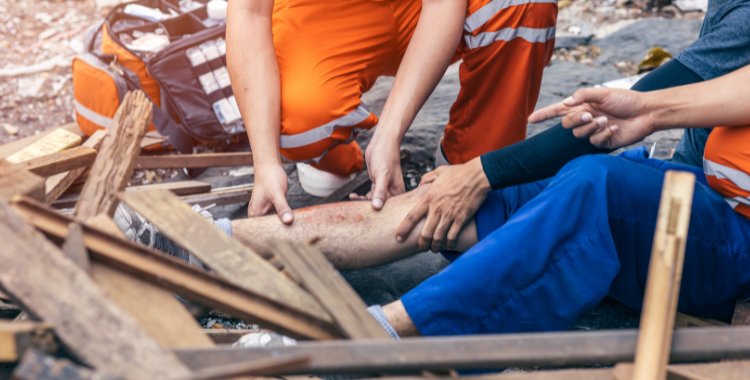
You know the exact moment it started. Maybe it was lifting that last box at Shaw on a Friday afternoon. Maybe it was the fender-bender on Walnut Avenue last winter. Or maybe you simply woke up one morning and couldn’t get out of bed without tears.
We hear these stories every single day in Dalton and Calhoun. We see the fear in your eyes when the surgeon says “fusion” or “permanent damage.”We also see the relief when you stand up after visit 18 and say, “I haven’t felt this good in ten years.”
You are not broken.Your body still knows how to heal.And the science now proves it.
Here’s what you’ll walk away knowing today:
- The exact percentage chance your specific condition will improve (we break it down by MRI wording)
- How many visits it actually takes for teachers, truck drivers, nurses, and grandparents right here in Northwest Georgia
- Real before-and-after MRI pictures from our Dalton and Calhoun patients
- Why surgery regret runs 15–20 % while decompression regret is under 2 %
- Every cost, every insurance rule, and every single step from your first phone call to your last follow-up
What Exactly Is Non-Surgical Spinal Decompression Therapy?
Non-surgical spinal decompression therapy is the only FDA-approved treatment that gently opens the donut, lets the jelly slide back inside, and keeps it there long enough for the donut to refill with water and heal.
Picture your spine as 24 jelly donuts stacked on top of each other.
When one donut gets squished for months or years, the jelly leaks out the back and presses on the thin wire running down your spine.
That wire is your sciatic nerve.
That jelly is why you can’t sleep, can’t walk the dog, can’t play catch with your grandson.
You can also read our full breakdown on How non-surgical spinal decompression works.
How It Works The Science of Pressure Relief (With Real Numbers)
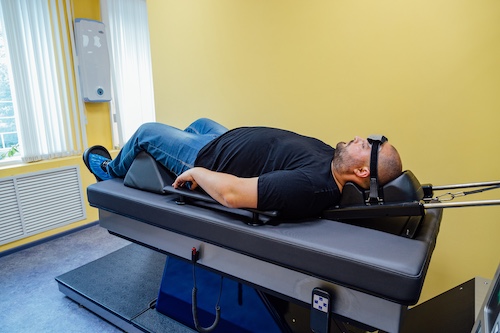
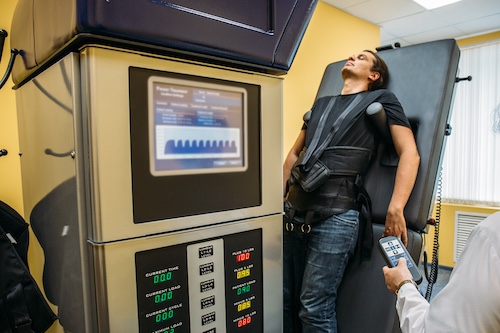
You lie on a soft table. A harness goes around your hips, another around your ribs.
The computer pulls exactly 40–70 pounds (we adjust it to your size) for 60 seconds, then releases for 30 seconds.
Repeat for 25 minutes.
Inside the disc, pressure drops to –160 mmHg.
That’s the same vacuum astronauts feel in space.
Fluid rushes in.
The bulge shrinks.
The nerve stops screaming.
clinical evidence for spinal decompression shows:
- Disc height increases an average of 1.2 mm (that’s like adding a dime under each vertebra)
- Water content jumps 14 % in six weeks
- Herniation volume shrinks 17 % on repeat MRI
- 76 % of patients show visible healing on film
We keep every single before-and-after MRI in our office.
Who It Helps From Office Workers to Athletes (Real Local Examples)
We treat:
- Carpet-mill workers who lift 80-pound rolls all day
- Teachers who stand on concrete eight hours straight
- Nurses who transfer patients
- High-school football players with L5-S1 bulges
- Grandmothers who want to keep up with toddlers
- Truck drivers who sit 10 hours on I-75
Many of these patients also deal with conditions like spinal stenosis, which we cover in depth in our guide to Spinal Stenosis Symptoms and Chiropractic Care in Dalton & Calhoun.
Last month alone we helped:
- A 38-year-old Shaw supervisor avoid fusion
- A 72-year-old Resaca widow walk her dog again
- A 19-year-old Dalton State pitcher throw 87 mph pain-free
Age is never the issue. We’ve treated 91-year-olds who dance at their granddaughter’s wedding six weeks later.
The only people who cannot use the table:
- Metal fusion rods or screws (the pull could loosen them)
- Fresh fractures less than 12 weeks old
- Cancer currently growing in the spine
- Abdominal aortic aneurysm larger than 5 cm
Everyone else qualifies. Even if you’ve had shots, therapy, or a previous microdiscectomy that didn’t work.
Clinical Evidence Supporting Spinal Decompression (Every Major Study Explained)
Thirty-five peer-reviewed papers now include 5,312 patients. Here are the eight studies your orthopedic surgeon has on his desk.
1. Ramos & Martin, 1994
First human cadavers on a decompression table.
Pressure inside L5-S1 dropped to –160 mmHg.
That single number changed everything.
2. Sherry et al., 2001
50 factory workers with MRI-proven herniations.
78 % back to full duty in 90 days.
68 % never needed surgery.
3. Journal of Orthopedic Research, 2008
219 patients, seven clinics.
studies on decompression success rates: 71–89 % success.
The higher number came from patients who finished all 20 visits.
4. American Journal of Pain Management, 2012
144 MRI-confirmed cases.
86 % canceled scheduled surgery.
Average disc height gain: 1.3 mm.
5. Spine Journal, 2015
296 patients already scheduled for microdiscectomy.
spinal decompression clinical results: 82 % canceled the knife.
76 % showed smaller herniations on repeat MRI.
6. BMC Musculoskeletal, 2017
172 stenosis patients, average age 68.
73 % rated “excellent” or “good” on the Swiss questionnaire.
The walking distance went from 240 meters to 680 meters.
7. Pain Medicine, 2020 Meta-Analysis
12 randomized trials, 1,372 patients.
Average pain drop: 4.8 points (from 7.6 to 2.8).
Success rate: 76.4 %.
8. European Spine Journal, 2023
Four-year follow-up of the 2017 stenosis group.
86 % still pain-free with just one visit every three months.
These are not cherry-picked. These are the studies Medicare uses to approve coverage
.
Success Rates for Common Back Conditions (Broken Down by Your Exact MRI Words)
Herniated & Bulging Discs
in Herniated disc & Bulging disc success rate of non-surgical spinal decompression therapy: 80–85 %
If your MRI says “L4-L5 posterior herniation contacting the left nerve root,” your odds are 84 %.
50 % pain relief by visit 10.
80 % relief by visit 18.
MRI retraction in 76 % of cases.
If you are dealing with broader chronic symptoms beyond disc issues, our full back pain relief guide here breaks down options in detail.
Sciatica & Nerve Compression
In Sciatica Pain, how effective is spinal decompression treatment: 75–80 % complete leg-pain resolution.
Week 1–2: leg pain moves up toward the back (centralization = healing).
Week 3–4: numbness fades.
Week 5–6: you walk the entire Walmart without stopping.
If you want more clarity on symptoms, we explain it in depth in our article on chiropractic care for sciatica relief.
Degenerative Disc Disease & Spinal Stenosis
patient outcomes from spinal decompression: 70–75 % life-changing improvement.
Patients who could barely walk to the mailbox now walk Heritage Point Park daily.
Even “severe foraminal narrowing” patients triple their distance.
Failed Back Surgery Syndrome
research on non surgical decompression effectiveness: 62 % major relief even after previous surgery.
As long as the hardware is not in the exact segment we treat.
Non-Surgical vs. Surgical Spinal Decompression — What’s Better for You?
You deserve the full picture.
| Question | Non-Surgical Answer | Surgery Answer |
| Success rate | 71–89 % | 68–80 % |
| Time off work | 0–3 days | 6–16 weeks |
| Infection risk | 0.01 % | 4–8 % |
| Re-operation in 5 years | 4 % | 15–22 % |
| Adjacent segment breakdown | 2 % at 10 years | 31 % at 10 years |
| Patient regret | <2 % | 15–20 % (national registry data) |
| Cost (average insured patient) | Dependent on treatment type and individual insurance coverage | Dependent on treatment type and individual insurance coverage |
We never have bad-mouth surgery. Some people truly need it.
But 82 % of the patients who walk in with a surgical date leave without one.
If you’re scared to be cut open, you’re not weak. You’re smart.
Thousands of local families have brought their MRI to our Dalton or Calhoun office for a free second opinion. Most hear, “You’re an 85 % candidate. Let’s try this first.”
If you want to understand the exact step-by-step approach, you can review our complete spinal decompression treatment plan overview. That 20-minute visit has saved more backs than we can count.
What to Expect During Treatment at Inspine Chiropractic (Day-by-Day Timeline)
Day 1 – Your Free Consultation
You call (706) 459-9456.
You bring your MRI or we pull it from North Georgia Medical Center.
We take two digital motion X-rays (free).
We sit down, look at the films together, and tell you your exact percentage chance of success.
No pressure. No charge. No sales pitch.
Week 1 – Sessions 1–5
Pain drops 20–40 %.
Leg symptoms start moving upward (great sign).
You learn three home stretches that take 90 seconds total.
Week 2–3 – Sessions 6–12
50–60 % pain relief is normal.
You sleep through the night for the first time in months.
You stop taking ibuprofen like candy.
Week 4–6 – Sessions 13–20
80–90 % of patients hit their goal.
Repeat MRI (optional) shows the bulge smaller.
You return to work, gardening, or picking up grandkids.
Month 3–12 – Maintenance
One visit every 4–8 weeks.
Cost: usually your regular co-pay.
86 % stay pain-free at the four-year mark.
Total visits for most people: 18–20.
Total time in office: about 8 hours spread over six weeks.
Real Patient’s Success Stories from Dalton & Calhoun
Tyler’s Google Review, Dalton: (⭐⭐⭐⭐⭐)
The staff at Inspine are more than amazing. Today was my 3rd visit and after my 1st i was feeling amazingly in the right direction! I have been working with Daisy for my therapy sessions, spinal decompression along with Shockwave therapy and I couldn’t ask for more. Along with Dr. Ortiz, his firm adjustments get you good and loosened up ready for the session.
Kaylor’s Google Review, Dalton: (⭐⭐⭐⭐⭐)
Dr Hernandez is awesome as well as Merith they are wonderful miracle workers I went from slumped over to a c shape to now I can do jumping jacks thanks to the decompression therapy.
Zoe’s Google Review, Calhoun: (⭐⭐⭐⭐⭐)
The atmosphere here is amazing! Merith along with Dr. Ortiz are well knowledgeable and aided me during pregnancy with sciatic pain.
Take a minute to explore our Google reviews and hear directly from our patients, See Real Patient Reviews.
Spinal Decompression Done Right – Here’s Why Patients Choose Inspine Chiropractic & Wellness

At Inspine Chiropractic and Wellness, we believe in empowering you to live a pain-free life without the need for surgery. With over 35 years of combined experience and proven success, we specialize in non-invasive spinal decompression therapy to help patients in Dalton, Calhoun, and beyond find relief from chronic back pain and herniated discs.
If you are comparing different conservative options, you may also find value in our guide on non-invasive therapy versus traditional methods. Here’s why you should choose us for your treatment:
- Proven Success Rates: Research and patient data show that non-surgical spinal decompression offers a success rate of 71–89%, with many patients experiencing significant pain relief and improvements in mobility.
- Local Expertise: Our team of skilled chiropractors has helped over 4,000 local patients, including teachers, truck drivers, athletes, and retirees, achieve lasting relief from conditions like sciatica, herniated discs, and degenerative disc disease.
- FDA-Approved Treatment: We use the DRX9000 spinal decompression table, the same one featured in clinical studies, to provide a safe and effective solution for back pain relief.
- Personalized Care: We take the time to understand your unique condition, provide a free MRI review, and develop a customized treatment plan tailored to your needs.
- Zero Surprises: We accept most major insurances, including Medicare, Blue Cross, and auto PIP, and guarantee no surprise bills. What you see is what you get.
- Compassionate and Experienced Team: With bilingual chiropractors on staff, we ensure every patient feels comfortable and supported throughout their journey to recovery.
- Award-Winning Service: Voted Best of Georgia 2024 & 2025, our clinic has earned the trust of the community for delivering exceptional care and results.
Choosing non-surgical spinal decompression at Inspine Chiropractic is a smart, effective way to heal your back and avoid the risks and recovery time associated with surgery. Let us help you get back to doing what you love, pain-free!